Why Every Small Startup or SME Needs Consulting to Grow in India 2026.
-
Home
-
Business Strategy & Growth
-
Why Every Small Startup or SME Needs Consulting to Grow in India 2026.

Why Every Small Startup or SME Needs Consulting to Grow in India 2026.

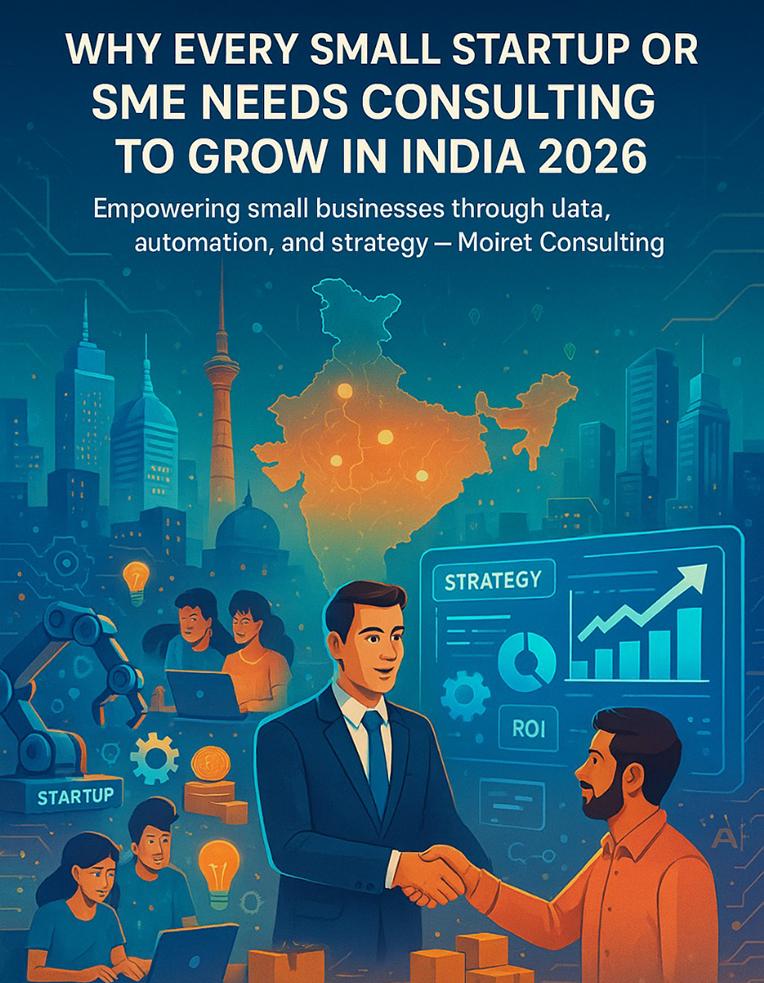
Table of Content
-
Introduction
-
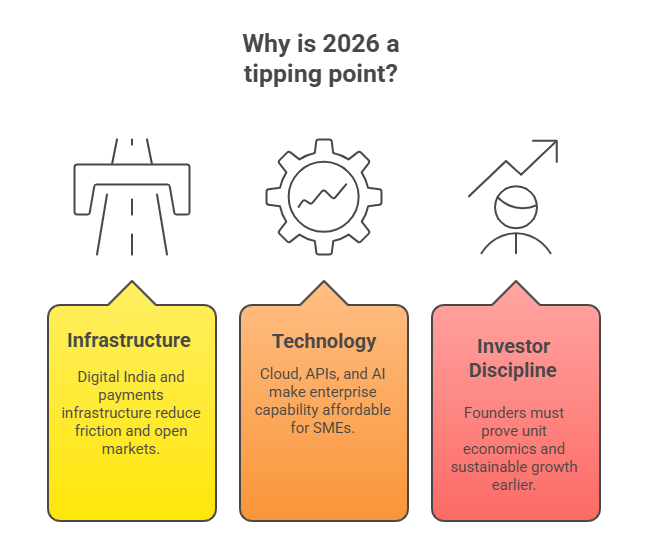
The changing face of startups & SMEs in India 2026
-
Why is 2026 a tipping point?
-
Why consultants win the numbers game
-
Automation as a Growth Catalyst
-
Strategic Consulting for Sustainable Growth
-
ROI — realistic, measurable outcomes
-
India 2026 – Market Forecast and Consulting Opportunities

Introduction
The Indian startup and SME ecosystem is undergoing a period of transformation as it approaches the year 2026. It has nearly 63 million micro, small, and medium enterprises that generated an almost 30 per cent contribution to India's GDP and employed more than 120 million workers; these figures are resounding (Source: Ministry of Micro, Small & Medium Enterprises, 2024). Besides, the number of active startups in India is expected to exceed 110,000 by 2026 due to governmental efforts like Startup India, as well as digital infrastructure efforts under Digital India.
However, the road to small businesses is not smooth. Raised competition, dynamic technology, and transforming customer demands imply that survival does not only require having a product or a service but also strategic development, efficiency, and innovation. It is at this point that professional consulting becomes a necessity.
Business consulting in India has also been transformed into a luxury service offered to big businesses to become a key driver of growth in business startups and SME. In 2026, small entrepreneurs who will utilise data, automation, and strategic direction will have a competitive advantage over small firms that will be left to operate in isolation.
The changing face of startups & SMEs in India 2026
The Indian SME/startup story has moved beyond simple digital presence. Between 2024 and 2025, tech startups continued to expand geographically (emerging hubs account for nearly half of new tech startups), and the number of tech players stabilised around the low-30k range, a sign of maturing ecosystems and deeper regional entrepreneurship.
At the MSME level, measured digital adoption is growing fast. Most MSMEs now accept online payments and a growing share report measurable benefits from digital tools, but structural gaps remain (credit access, skilled talent, governance and high-cost AI adoption). SIDBI and other surveys show MSMEs are increasing exports and digital payments adoption, but only a fraction use digital lending or advanced AI pipelines.
Why consultants win the numbers game
- Marketing ROI optimisation: multi-channel attribution models and cohort analysis reduce wasted ad spend and lift ROI by 20–50% in pilot cases.
- Sales forecasting & pricing: advanced analytics calibrates funnel conversion rates and pricing elasticity, converting uncertainty into predictable revenue.
- Cash flow and working capital modelling: scenario planning tied to supplier payment cycles reduces cash stress and improves runway decisions.
Operational dashboards: single-pane KPI dashboards (Power BI / Tableau) and CRM dashboards (Salesforce/Zoho) turn raw data into weekly decision triggers.
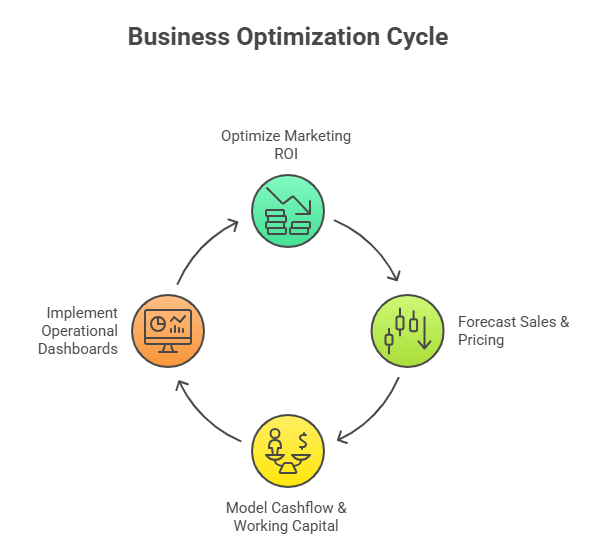
Consultants combine these tools (Power BI, Google Analytics / GA4, CRM dashboards, and lightweight data pipelines) with governance: clear KPI definitions, SLAs for data quality, and short feedback loops. That’s data-driven consulting: not dashboards for aesthetics, but decision systems that reduce managerial guesswork and speed up pivots.
Automation as a Growth Catalyst
Automation is one of the highest-leverage outcomes of consulting engagements. Properly applied, automation
-
Eliminates manual errors, lowering rework and customer friction
-
Speeds processes, shortening billing cycles and improving cash conversion.
-
Frees people for higher-value tasks, lifting morale and productivity.

Real implementations show clear wins: banks and insurers that adopted RPA and document processing cut process times by 40–50% and delivered measurable ROI in months. For example, a major Indian bank used RPA automation to meet compliance deadlines in half the time, converting an expected 12-month effort into a 6-month delivery with substantial savings. Another healthcare operations firm tied AI document processing to massive throughput gains, saving thousands of staff hours monthly and delivering strong ROI.
Consultants don’t simply recommend automation tools; they design fit-for-purpose automation (RPA like UiPath, no-code orchestration, CRM/ERP integrations) that respects process ownership and builds adoption: pilot → scale → govern.
Strategic Consulting for Sustainable Growth
In today’s competitive business landscape, small and medium-sized enterprises (SMEs) face constant pressure to grow efficiently while maintaining financial discipline. At Moiret, we believe sustainable growth begins with focusing on the right consulting priorities in the right order.
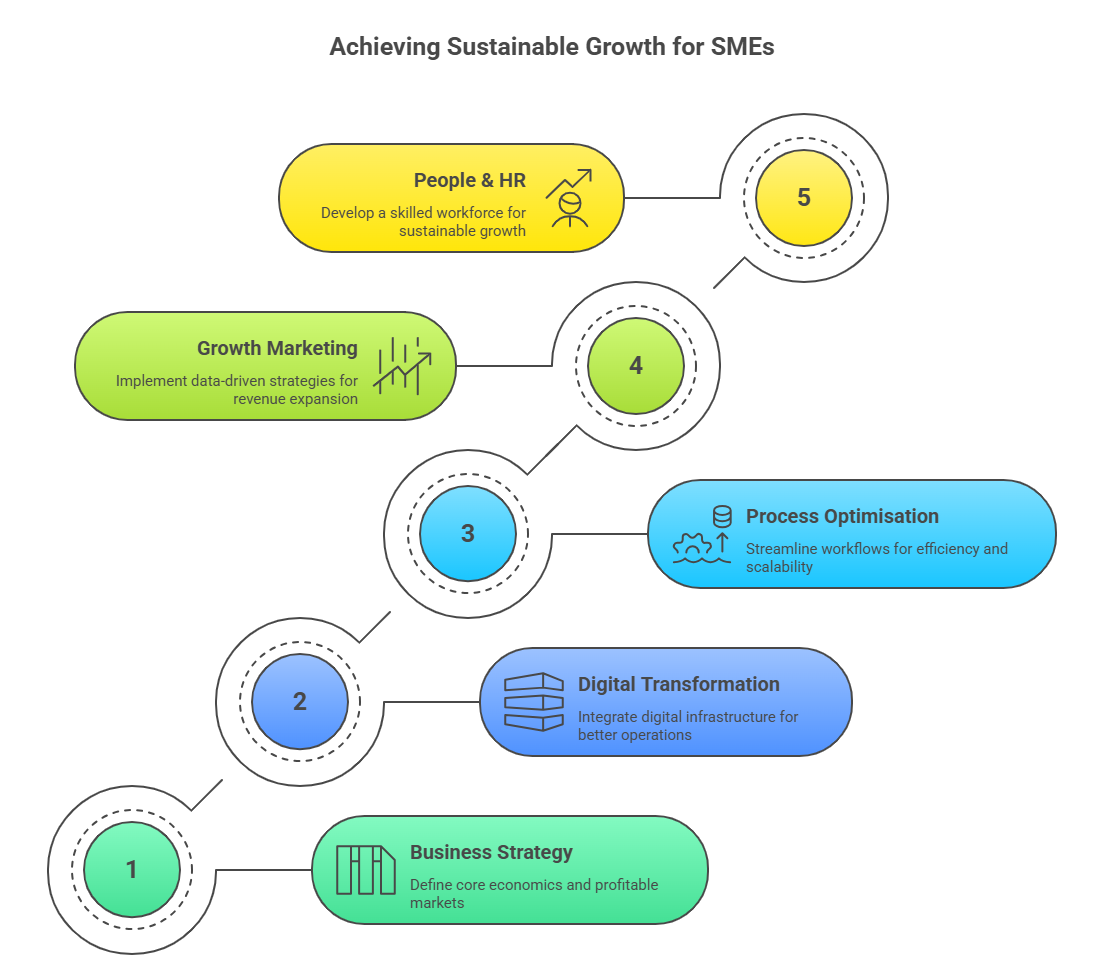
Small firms should prioritise these consulting areas (in this order for most early-stage SMEs):
Business Strategy & Unit Economics
Before scaling, clarity on your core economics is essential. This means understanding your customer segments, identifying your most profitable markets, and building robust CAC/LTV models. A solid strategy defines your breakeven point and ensures every growth initiative drives measurable returns.
Digital Transformation
Modern businesses run on digital infrastructure. From cloud migration to centralised data management and core system integrations (ERP, CRM, payments), digital transformation enables better decision-making, smoother operations, and improved customer experience.
Process Optimisation & Automation
As a company grows, manual processes become bottlenecks. Streamlining workflows like order-to-cash, procurement, and invoicing helps reduce costs, improve accuracy, and free up time for strategic initiatives. Automation isn’t just about efficiency — it’s about creating scalable foundations.
Growth Marketing & Sales Operations
Once the business model and operations are stable, it’s time to accelerate growth. Data-driven marketing and well-structured sales systems from funnel optimisation to account-based marketing (ABM) and retention playbooks ensure consistent revenue expansion and customer loyalty.
People & HR Consulting
Finally, sustainable growth depends on people. Building a hiring blueprint, establishing performance systems, and developing digital skills prepare your workforce to execute the company’s vision. Investing in people ensures agility and innovation across all levels of the organisation.
ROI — realistic, measurable outcomes
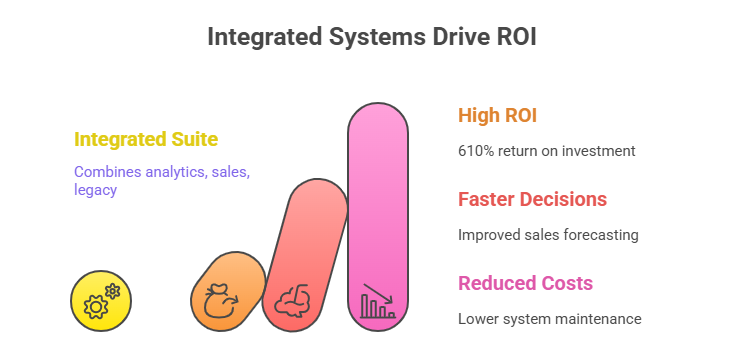
One of the most common concerns small and mid-sized enterprises (SMEs) have when engaging consultants is: “Will this investment really pay off?” The answer lies in how the consulting engagement is structured. When consulting projects are scoped around outcomes, not billable hours, the return on investment (ROI) becomes both realistic and measurable.
Effective consulting engagements begin with a clear definition of success metrics: revenue uplift, cost savings, operational efficiency gains, or time-to-market improvements. By anchoring projects in quantifiable KPIs, both consultants and clients can track value creation in real time, turning strategy into measurable performance.
Across industries, the ROI of well-executed consulting projects is consistently proven by data:
- Manufacturing Case Example: A mid-sized manufacturer implemented an integrated business suite that combines analytics, sales efficiency tools, and rationalisation of legacy systems. Within a year, the company achieved a 610% ROI, driven by faster decision-making, improved sales forecasting, and reduced system maintenance costs.
- Financial Services Example: A major bank automated its compliance and claims processing workflows, cutting project delivery times by half. The automation not only ensured faster compliance alignment but also saved thousands of employee hours annually, a direct cost efficiency with long-term compounding value.
India 2026 – Market Forecast and Consulting Opportunities
Looking ahead, certain sectors in India are poised for exponential growth.
Digital payments, lending, and blockchain solutions are expanding rapidly.
Growing internet penetration and mobile commerce adoption.
Government incentives for local production (Atmanirbhar Bharat) and export expansion.
Technology-driven solutions for supply chain, crop monitoring, and logistics.

Consulting firms will play a pivotal role in helping these sectors overcome operational bottlenecks, integrate automation, and leverage data for smarter decisions. Government initiatives, including Digital India Phase 2 and MSME-focused policy support, further reinforce the need for professional guidance in navigating regulations, technology adoption, and growth strategy.
The Indian startup and SME ecosystem in 2026 offers unparalleled opportunities but also formidable challenges. Consulting is no longer a luxury; it is a strategic necessity. From leveraging data analytics to implementing automation and driving strategic growth, professional consulting empowers businesses to scale efficiently, reduce costs, and increase revenue.
Startups and SMEs that engage consulting services now position themselves for sustainable growth, operational excellence, and competitive advantage. The choice is clear: investing in consulting is not a cost, it’s a multiplier for growth. To stay competitive in India 2026, the time to act is now.
Share this post:
Leave a comment
Your email address will not be published. Required fields are marked *
Related Posts
The top 10 business strategy trends shaping 2026, providing insights for executives, entrepreneurs,...